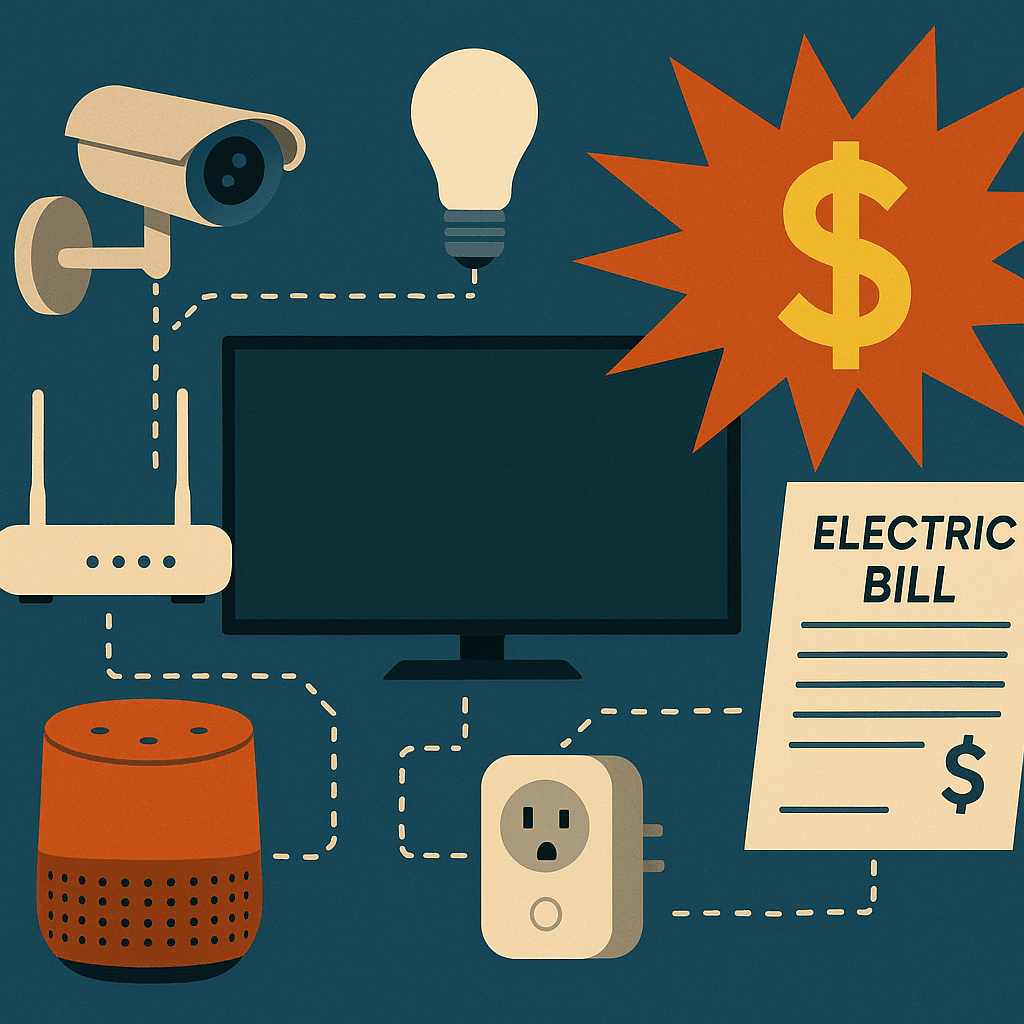
Smart homes are supposed to be smart — efficient, effortless, and cost-saving. But for many households, the reality doesn’t always match the promise. As more homes fill up with connected devices — from smart fridges and speakers to security cameras and light bulbs — a quiet threat is growing: standby power consumption.
The Always-On Problem
Most smart devices need to be always on — or at least always listening — to function. Voice assistants like Alexa, smart TVs, security systems, and even robot vacuums draw power 24/7. While each device may only use a small amount of electricity, together they create a ‘phantom load’ that adds up quickly.
A recent study by the Natural Resources Defense Council found that U.S. households spend an average of $165 per year on electricity for devices that aren’t actively being used. In Australia, that figure can be even higher, especially with rising energy costs.
What’s Using the Most Power?
Some of the biggest stealth energy drains in smart homes include:
- Smart TVs – Even in standby, many models draw 5–15 watts.
- Voice assistants & smart speakers – Always listening = always drawing power.
- Wi-Fi routers and mesh networks – Essential, but easily forgotten in the energy equation.
- Smart plugs, lights and thermostats – Even when not in active use, many remain in low-power standby mode.
- Security cameras and video doorbells – Continuous power draw for 24/7 surveillance and cloud syncing.
Individually, they may not seem significant — but combined, they can quietly inflate your electricity bill by hundreds of dollars a year.
The Smart Way to Save
So how do you keep your home smart and energy-efficient? Here’s how to take control:
✅ Audit Your Devices
Use a smart plug with energy monitoring or a power meter (like the Powerpal or Efergy) to track usage. Look for devices that are always on and assess if they need to be.
✅ Disable Standby Where Possible
Many devices offer energy-saving or eco modes. For example, turn off “quick start” mode on your smart TV, which uses more energy to boot up faster.
✅ Use Smarter Scheduling
Automate smart plugs and lights to switch off when not needed. If no one’s home, the smart kettle doesn’t need to be waiting.
✅ Consider Device Consolidation
Do you need a smart speaker in every room? Reducing redundancy helps reduce consumption.
✅ Choose Energy-Efficient Brands
Not all smart tech is built equal. Look for products with good energy ratings or low standby consumption.
✅ Power Down While Away
Going on holiday? Unplug non-essential smart devices entirely — especially those that don’t need to run in your absence.
Final Thoughts
Smart homes offer incredible convenience, but convenience comes at a cost — sometimes quite literally. The key is to be smarter than your smart home. A little effort in auditing and optimising your setup can protect your wallet and help reduce unnecessary energy use.
Ready to find your match? Start comparing plans today and experience the difference the right provider can make!